
Sven Slootweg (soft-deprecated) @joepie91@pixie.town
- Future new account
- @joepie91@slightly.tech
- Matrix
- @joepie91:pixie.town
- Pronouns
- they/them, he/him, whatever, it's not like I have any idea either 🙃
In the process of moving to @joepie91. This account will stay active for the foreseeable future! But please also follow the other one.
Technical debt collector and general hype-hater. Early 30s, non-binary, ND, poly, relationship anarchist, generally queer.
- No alt text (request) = no boost.
- Boosts OK for all boostable posts.
- DMs are open.
- Flirting welcome, but be explicit if you want something out of it!
- The devil doesn't need an advocate; no combative arguing in my mentions.
Sometimes horny on main (behind CW), very much into kink (bondage, freeuse, CNC, and other stuff), and believe it or not, very much a submissive bottom :p
My spoons are limited, so I may not always have the energy to respond to messages.
Strong views about abolishing oppression, hierarchy, agency, and self-governance - but I also trust people by default and give them room to grow, unless they give me reason not to. That all also applies to technology and how it's built.
Joined Aug 2019
Sven Slootweg (soft-deprecated)
boosted
Sven Slootweg (soft-deprecated)
boosted


help all the people in the netherlands on my timeline have been activated
Sven Slootweg (soft-deprecated)
boosted

NL (Dutch) politics (non PVV/Wilders), transphobia
There's also mention of employing AI in moderation online, especially for smaller platforms. And I don't think I'm telling most of you new things when I say that large language models tend to be biased against minorities, and language use we do. Especially when these models are trained on biased moderation from big corporations, as they probably will be. Such measures are also very easily co-opted by the government to spy on people who have dissenting views, something again queer people tend to have.
All in all my conclusion is that Dutch neoliberal politics (as most neoliberal politics) always uses the suffering of a minority group to do a few things:
1. divide minority groups and smash solidarity
2. use the statistics to increase policing
3. use the statistics to increase government control
All wrapped up in a fluff story about how much they care about us queers, while spitting on our safety and input every step of the way. The fascists have been in power for a while, they just hide it better than in 1937.
(4/4)
Sven Slootweg (soft-deprecated)
boosted
NL (Dutch) politics (non PVV/Wilders), transphobia
Then the response said something that really peaked my interest. The minister talks about anonymity specifically in the context of hate crime online, and how this might impact the amount of hatecrimes received by queer people online. A statement that most queer people will realise is absolute bunk, most hatecrime I've personally received has been white men who have their full name and surname on platforms, and their face as a profile picture. This doesn't harm them, they have systemic protection on their side. Anonymity is a tool for queer people to protect their own identities on the other hand, and keep them from being outed or harassed in real life from slights on the internet. This measure would again hurt queer people, and especially queer people in subcultures that are more queerphobic the most.
(3/4)
Sven Slootweg (soft-deprecated)
boosted
NL (Dutch) politics (non PVV/Wilders), transphobia
The paper then moves on to the systemic solutions the policing will take shape in, specifically immediately alluding to policing specific groups of people who their statistics tell them are more likely to do these hatecrimes. This is an instinct that a lot of Dutch people have most likely become intimately familiar with, given how many scandals in systemic racism it has already caused (SIRI, the tax service scandal et al.). Given that white queer people who are privileged in some way, and who feel more threatened by the hatecrime are most likely to go to police, this will probably schew the numbers far towards racialised minorities, creating an excuse for the government to police them more and pit these groups against one another. When in reality this will impact queer people of colour the most, they are the ones that are policed most and put more in harms way.
(2/4)
Sven Slootweg (soft-deprecated)
boosted
NL (Dutch) politics (non PVV/Wilders), transphobia
I just read some publication from the Dutch government pertaining to hatecrimes towards LGBTQI+ people, and their increase based on a study that said there was an increase in the last period by 67%. My original source is this: https://www.tweedekamer.nl/kamerstukken/kamervragen/detail?id=2023D47827&did=2023D47827
I'll walk you through it as a summary and give you some thoughts, because I think this is important to see how the Dutch government operates, and how it systemically fails to protect anyone, especially racialised minorities.
So we start out with the obvious, as the paper starts as well, with policing. The main "solution" proposed to this issue is an increase in policing, and an increase in the costs associated with being fined for hatecrimes. This is at best a non policy, and will most likely shape out to be actively harmful. There's a lot of reasons for this, from being harmful to the perpetrator of the violence, systemic racism in policing, and the fact that perpetrators will be more incentivized to keep their victims from being able to go to the police for hatecrimes (by intimidation or worse murder). And a lot more that I can't summarise here effectively.
(1/4)
Sven Slootweg (soft-deprecated)
boosted

Today's open source bughunt story:
1. Lets get rid of gtk2 on my system!
2. gtkspell needs gtk2, pidgin needs gtkspell
3. Lets open a bug on ArchLinux to switch pidgin from gtkspell->gtkspell3
4. The ArchLinux bug tracker has moved to GitLab
5. gtkspell is hard pidgin dependency, lets check upstream.
6. pidgin's bug tracker has moved to Jira
7. pidgin plans the gtkspell3 upgrade for the 3.0 release
8. the pidgin 3.0 release has been under progress for 14 years now.
Edit: I uninstalled pidgin
Sven Slootweg (soft-deprecated)
boosted
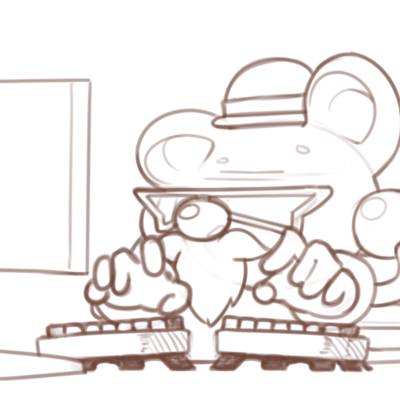
Someone installed NixOS outside.
Sven Slootweg (soft-deprecated)
boosted

kinda subpost, ableist words
the reason why we shouldn't use words like "retarded" and "autistic" as insults is because they generally refer to mental conditions of perfectly good people, and treating them as aliases for "bad" is treating these people as bad too (the former is mostly never used any more because it just means "slow," and being slow isn't a bad thing)
the reason why we shouldn't use "stupid" and "smart" is for a completely different reason. saying something to the effect of "I know plenty of stupid people, and they're still good people" is... reinforcing the harmful, unscientific, ableist structures those words uphold
like, genuinely, the words "smart" and "stupid" are just socially loaded synonyms for "good" and "bad." seriously, I highly recommend that you consider every time these words are used and replace them with "good" and "bad." oftentimes, it'll reveal just how nonspecific and awful they are as descriptors
the truth is, intelligence as a concept just means "good in ways we've socially decided that are better than other ways." if you're "smart," that means that you're the Society Approved version of good, and ditto for "stupid" and "bad"
like, seriously, think of the other ways people describe these words. having (or not having) knowledge makes you smart or stupid, but only the right kind of knowledge. knowing maths makes you smart, but knowing art doesn't. people separate terms like "street smart" and "book smart" but then further, don't actually accept certain kinds of knowledge in either.
like, knowing how to quote any line from a particular show, for example, can be harder than knowing how to identify leaves of plants, but the former isn't really considered smart. so, it's not connected objectively to anything, just as a value judgement
and similarly, people tend to use "stupid" to just dismiss things they don't want to explain. don't like something? call it stupid... which is the same as calling it bad, but then you're not allowed as much to say "bad how?" since we act like "stupid" is an objective thing when it isn't
the reason why we shouldn't use these words is because they support the ableist system of assigning value judgements to things society likes or dislikes, without ever explaining them. it encourages not elaborating on or analysing value judgements for the sake of upholding bad systems. and of course, ableism is the root of all oppression, because it all starts at "this person is worse than me, for reasons I get to decide but not explain"
so, it's not as simple as "there are good stupid people, so, don't treat stupid as a bad thing." it literally is that, stupid means "this is bad and I actively refuse to say why." it just encourages upholding oppression and never thinking of why
Sven Slootweg (soft-deprecated)
boosted
why are posts with the formula "share/boost/repost this if you [really basic thing any decent human subscribes to]" appearing all over the fedi?
what is this?? 2009 facebook???
Sven Slootweg (soft-deprecated)
boosted



Wait, PTR records are not singletons?
You can have multiple of them?
When you go ping something it occasionally switches in between for the display?
OMFG that's cursed.
hbomberguy video
"Nobody ever checks anything" strikes again
Sven Slootweg (soft-deprecated)
boosted

Pro-Blackness scares some because there is an assumption that it operates like white supremacy: violently.
-- Broderick Greer
#racism #whiteness #WhiteSupremacy #FuckRacism #FuckWhiteness #FuckColonisation
update, re: moderation, kind of meta but more general
In an oddly timely twist, you can see almost this exact thing happening in several of the cases in hbomberguy's latest video about plagiarism.
People getting caught on plagiarism and patterns of behaviour, and them then reframing things as if it was just one little irrelevant thing that people got mad at, completely removing all context from the accusation to mislead people into believing they are innocent.
Sven Slootweg (soft-deprecated)
boosted
one of my biggest frustrations as an activist
The phenomenon where every person you talk to individually agrees that it would be great if the world looked like X, but doesn't believe that enough other people want the same thing.
Except that "X" is the same for everyone you talk to, and the actual point where the conflict lies between them, is only in the different premature "compromises" they've come up with under the assumption that X would not be achievable.
Sven Slootweg (soft-deprecated)
boosted

Sven Slootweg (soft-deprecated)
boosted
what do we want?
a widely available caries vaccine
when do we want it?
before I have to buy another tube of toothpaste, fuck do I really have to buy toothpaste for the rest of my life
Sven Slootweg (soft-deprecated)
boosted
Disability visibility
But it's not me. It's the system. And for a long time I thought the system was just really ignorant and didn't know how to see me. The system would help me if I'd only get my message accross. I'm rethinking that. Because I don't know any disabled people who speak about the system with trust. We speak about the system with hurt. With fear. With anger.
We know we need to fight to get what we need, or give up asking. The more ill or disabled or vulnerable we are, the harder that fight is. The system makes it harder, but also our bodies have no resources left to fight without consequence.
And that's on purpose. The system is created by a society who'd rather look away than help us. They want us poor. They want us hurting. They are so stuck in a capatalist mindset that anyone not working (as much) is a burden. Society beliefs that with easy to access help, we'd exploit them. So they exploit us.
Sven Slootweg (soft-deprecated)
boosted
Disability visibility
Wondering if I want to write anything because it's disability visibility day, and just while I think about it I get a text with nothing but crying emoji.
The friend texting me is too ill to type more, but she knows I get it. I know. She's desperate and the world keeps rejecting her cries for help.
She doens't fit in easy boxes. I see that happening a lot in the disability community, including in my own life.
'We're here to treat problem x. You also have problem y. We can't help you.'
'We're here to treat problem y. You also have problem x. We can't help you'.
And there isn't any place that's both expert on x and y. So you're left to figure it out without help.
(this is about medical help, but the same shit when we ask for financial or practical help)
And I see non-disabled people look with surprise at my lack of help by doctors/professionals. They get good care. Why don't I? They assume it's me who's doing something wrong because they can always trust the system to take care of them.
Ik wil sneeuw :(

- Future new account
- @joepie91@slightly.tech
- Matrix
- @joepie91:pixie.town
- Pronouns
- they/them, he/him, whatever, it's not like I have any idea either 🙃
In the process of moving to @joepie91. This account will stay active for the foreseeable future! But please also follow the other one.
Technical debt collector and general hype-hater. Early 30s, non-binary, ND, poly, relationship anarchist, generally queer.
- No alt text (request) = no boost.
- Boosts OK for all boostable posts.
- DMs are open.
- Flirting welcome, but be explicit if you want something out of it!
- The devil doesn't need an advocate; no combative arguing in my mentions.
Sometimes horny on main (behind CW), very much into kink (bondage, freeuse, CNC, and other stuff), and believe it or not, very much a submissive bottom :p
My spoons are limited, so I may not always have the energy to respond to messages.
Strong views about abolishing oppression, hierarchy, agency, and self-governance - but I also trust people by default and give them room to grow, unless they give me reason not to. That all also applies to technology and how it's built.
Joined Aug 2019
