
Sven Slootweg (soft-deprecated) @joepie91@pixie.town
- Future new account
- @joepie91@slightly.tech
- Matrix
- @joepie91:pixie.town
- Pronouns
- they/them, he/him, whatever, it's not like I have any idea either 🙃
In the process of moving to @joepie91. This account will stay active for the foreseeable future! But please also follow the other one.
Technical debt collector and general hype-hater. Early 30s, non-binary, ND, poly, relationship anarchist, generally queer.
- No alt text (request) = no boost.
- Boosts OK for all boostable posts.
- DMs are open.
- Flirting welcome, but be explicit if you want something out of it!
- The devil doesn't need an advocate; no combative arguing in my mentions.
Sometimes horny on main (behind CW), very much into kink (bondage, freeuse, CNC, and other stuff), and believe it or not, very much a submissive bottom :p
My spoons are limited, so I may not always have the energy to respond to messages.
Strong views about abolishing oppression, hierarchy, agency, and self-governance - but I also trust people by default and give them room to grow, unless they give me reason not to. That all also applies to technology and how it's built.
Joined Aug 2019
Sven Slootweg (soft-deprecated)
boosted

my understanding of the #hachyderm meta
i noticed this post: https://hachyderm.io/@mahtheyzhawey/110126192104204312
and made this fediblock post: https://beach.city/@vantablack/110249673299010946
for this reason: https://beach.city/@vantablack/110251505042319404
some instances announced actions to be taken: https://strangeobject.space/@admin/110264904263039779
a bit later the admin announced she was stepping down: https://hachyderm.io/@nova/110268918029141405
but they've made plans to change the rule (good): https://github.com/hachyderm/community/issues/401
also there's this other stuff i found:
hot take
The existence of a "thumbs down" reaction button on a platform just invites brigading and harassment, it does not contribute to constructive conversation in any way; and it is a community management error to introduce a thumbs-down button just because you also have a thumbs-up button
Sven Slootweg (soft-deprecated)
boosted

this resonates with me so much 
(a suitable allegory for any number of -isms and -phobias)
Sven Slootweg (soft-deprecated)
boosted

 Θ
Θ
meta, "ActivityPub vs AT/BlueSky"
As much as I like dunking on AT/BlueSky for not having a block function, let's be honest: This is far actually working on Fedi, is it? It's rather hard to block users on an individual level, and if a remote instance just ignores blocks, blocked users on such an instance can still see shit. Even worse, such instances could (and some currently do! though we suspend them for this) track blocks of local users and go harass folks that block someone.
So yeah, we are definitely not perfect in this regard, either.
Sven Slootweg (soft-deprecated)
boosted

Your regular reminder sex addiction is a myth. It's in neither the DSM or ICD, and it's history is part of a trend of labeling non-normative sexuality as a pathology.
Sven Slootweg (soft-deprecated)
boosted


Me: *starts rewriting second project in rust*
Me: oh no the prophecy
Sven Slootweg (soft-deprecated)
boosted
And I don't think it's a coincidence that so many things that are counterculture or taboo in society are exactly the things that help people feel a sense of bodily autonomy. I'm sure there are links to capitalism here, but more deeply I think it's about jealousy and hate.
Jealousy from generational trauma that denied our parents and grandparents ad nausem their own (bodily) autonomy, so they projected that onto us so we wouldn't pursue it ourselves, queer or not.
Sven Slootweg (soft-deprecated)
boosted
So the WHO is finally saying it out loud:
One in ten covid infections will need long term care.
As a #DnD player, I can tell you this is way more likely than it seems at first.
If infected with covid, and you roll 1 on a 1d10:
Gain a permanent level of exhaustion.
So wear a mask.
Get a decent modifier on your Constitution saving throw against infection.
cursed
Composting is just feeding vegetables to other vegetables, ie. vegetable cannibalism
Sven Slootweg (soft-deprecated)
boosted
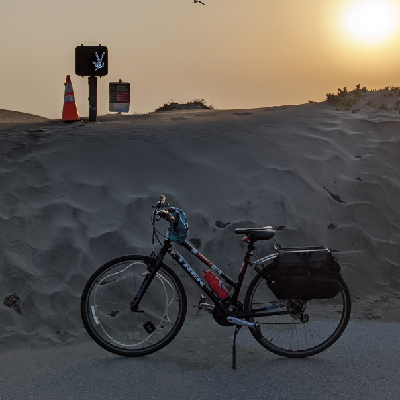

 (SF)
(SF)
Does anyone have advice on what to use for a mailing list for a community group? Looking for something simple and totally non commercial
Sven Slootweg (soft-deprecated)
boosted

long, the bystander effect, discussion of near-accident
@joepie91 I completely agree with you. I've been trained as a civilian first responder so in case of an accident or a disaster I know what to do to save lives. What people generally call the bystander effect is actually also in part the freeze response. Something traumatic happens, they don't know what to do, so they freeze. To snap people out of it, all that's usually required is somebody to address them and give them a clear task. For example, when you see someone collapsing... "You! Dial 911, tell them there's a resuscitation in progress and stay near me! You, fetch the AED at the front desk on the double! You! Get these other people out of here, we need some room!" It doesn't really matter who you point at - they'll most likely snap into action and do as they're told.
long, the bystander effect, discussion of near-accident
You know the "bystander effect"? The idea that in a crisis, when there's multiple people around, nobody will do anything because everybody is expecting someone else to do something - the claim being that "individuals don't have a sense of responsibility anymore".
It's a widely believed concept. It's also based on faulty data, never credibly proven, and increasingly being debunked through research of real-world incidents. By all appearances, the theory is complete nonsense.
(The original incident that sparked this theory ended up being much more about failure of the police to respond to calls for help: https://en.wikipedia.org/wiki/Murder_of_Kitty_Genovese - but that's a different topic.)
More interesting is the question of why people believe they have experienced the bystander effect themselves, if it doesn't exist. And we're not just talking biased interpretation of events, but actual scenarios where nobody stepped in to help.
And I'd like to propose a more credible explanation: what if people just *don't know what to do*, and need guidance?
Look at this video of an incident, for example: https://www.youtube.com/watch?v=TtqBU5xmv5Y (CW: video of fairground ride almost falling over, no injuries to my knowledge)
You'll notice that initially, nobody is responding, nobody is doing anything. But as soon as one person runs towards the ride to counterbalance it - everybody else joins in!
Does this really look like "nobody has a sense of responsibility"? Because to me, it looks a lot more like "people just didn't know what to do, until someone showed them", and the difference is subtle to an external observer.
I think this is a particularly important thing to consider when people raise the bystander effect as a reason why police needs to exist; it's based on the premise that you cannot trust 'regular people' to take the necessary actions to deal with incidents.
But that doesn't seem to be true - they just need to be prepared to know how! And to top it off, poor handling of an incident by police is how the entire theory came to exist in the first place.
Sven Slootweg (soft-deprecated)
boosted
“Can you explain this gap in your CV?”
Can you explain this gap in your workforce?
Sven Slootweg (soft-deprecated)
boosted
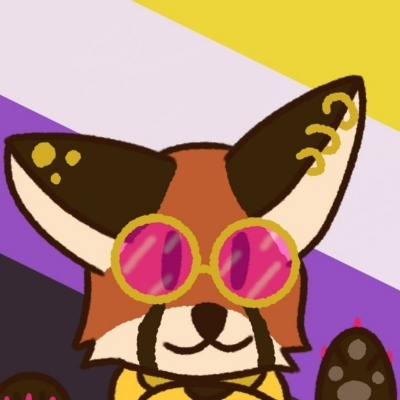
If your cyberpunk story includes people who do aesthetic only cyber body mods, but don't add at least one person with some sort of robo-animal ears/tail you are a fucking coward!
meta
Growing increasingly frustrated by people going "this is not how Mastodon was framed to me, it was described as a coherent Twitter alternative! I have been deceived!" while many of us have expended considerable effort to debunk that idea in the face of a tidal wave of lazy journalism spreading it further
Sven Slootweg (soft-deprecated)
boosted

I once again learn about a new ND thing which has been affecting me my whole life without me realizing it. Today it is "waiting mode", where you're stuck not doing anything while waiting for something scheduled hours away
Sven Slootweg (soft-deprecated)
boosted
I wonder what the cumulative psychological effect is of subjecting people to thousands of ads every day that do nothing but remind them of their every ache, pain, and unsatisfied craving. Prolly not great, if I'm taking a guess.
Sven Slootweg (soft-deprecated)
boosted


Mild take: right wing media is emotional comfort food for those who have been battered and abused by their own culture to the point where they are only comfortable when they are afraid.
Sven Slootweg (soft-deprecated)
boosted
If you're an instance admin, would you be happy to opt in to a 'list of trusted instances for people new to fedi who need a safe instance' that asks you;
- Are there BIPOC/queer/disabled/neurodivergent people on your mod team
- Do you maintain a block list, either importing from a trusted source and/or actively monitoring fediblock
- Do you proactively moderate
- Do you defederate from instances that don't moderate hate speech
- Do your rules prioritise safety of marginalised folk
indieweb, rant
I honestly think the indieweb circles still have a *lot* of work left to do, and a lot of introspection at their own ranks to carry out, before I can take them seriously.
As it stands, it consists of way too many people who are speaking from a privileged position, or actively inviting or cooperating with bad actors (eg. corporations).
It's all big words about independence and personal websites, but not enough words about how we can make all of that actually accessible to a diverse set of marginalized folks for whom "setting up a website" isn't something they grew up with.
And meanwhile there's plenty of corporate sponsorships, spotlights of commercial ventures, and so on. It sure doesn't feel like the "web for the people" that it tries to present itself as.
Indieweb folks should start centering marginalized folks (and that doesn't just mean "women" either!) and talking about how to solve the *difficult* problems of accessibility on an independent web.
And crucially: more marginalized folks speaking, and less white tech dudes speaking *for* them.
(This is not a criticism of any one particular incident or person; it's a long-standing 'background frustration' that seems to get reconfirmed every time I run into indieweb stuff.)

- Future new account
- @joepie91@slightly.tech
- Matrix
- @joepie91:pixie.town
- Pronouns
- they/them, he/him, whatever, it's not like I have any idea either 🙃
In the process of moving to @joepie91. This account will stay active for the foreseeable future! But please also follow the other one.
Technical debt collector and general hype-hater. Early 30s, non-binary, ND, poly, relationship anarchist, generally queer.
- No alt text (request) = no boost.
- Boosts OK for all boostable posts.
- DMs are open.
- Flirting welcome, but be explicit if you want something out of it!
- The devil doesn't need an advocate; no combative arguing in my mentions.
Sometimes horny on main (behind CW), very much into kink (bondage, freeuse, CNC, and other stuff), and believe it or not, very much a submissive bottom :p
My spoons are limited, so I may not always have the energy to respond to messages.
Strong views about abolishing oppression, hierarchy, agency, and self-governance - but I also trust people by default and give them room to grow, unless they give me reason not to. That all also applies to technology and how it's built.
Joined Aug 2019
