

Sven Slootweg (soft-deprecated) @joepie91@pixie.town
- Future new account
- @joepie91@slightly.tech
- Matrix
- @joepie91:pixie.town
- Pronouns
- they/them, he/him, whatever, it's not like I have any idea either 🙃
In the process of moving to @joepie91. This account will stay active for the foreseeable future! But please also follow the other one.
Technical debt collector and general hype-hater. Early 30s, non-binary, ND, poly, relationship anarchist, generally queer.
- No alt text (request) = no boost.
- Boosts OK for all boostable posts.
- DMs are open.
- Flirting welcome, but be explicit if you want something out of it!
- The devil doesn't need an advocate; no combative arguing in my mentions.
Sometimes horny on main (behind CW), very much into kink (bondage, freeuse, CNC, and other stuff), and believe it or not, very much a submissive bottom :p
My spoons are limited, so I may not always have the energy to respond to messages.
Strong views about abolishing oppression, hierarchy, agency, and self-governance - but I also trust people by default and give them room to grow, unless they give me reason not to. That all also applies to technology and how it's built.
Joined Aug 2019
Sven Slootweg (soft-deprecated)
boosted

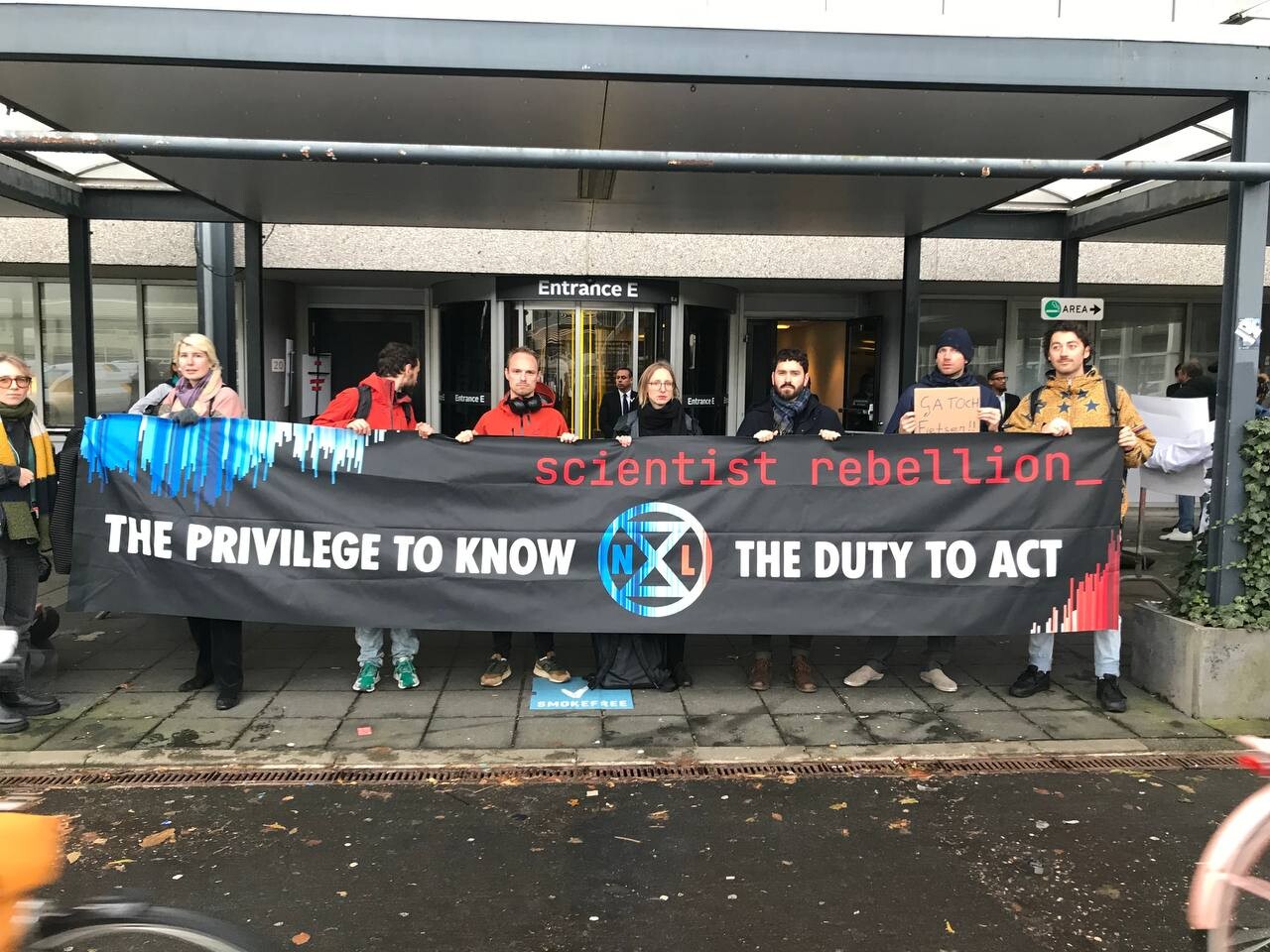
🔥 We're blocking the superyacht forum! 🔥
Scientist Rebellion and @extinctionrebellionnl are blocking the entrance of the superyacht forum at the RAI Amsterdam this morning. Superyachts are a caricatural symbol of climate and social injustice.
A symbol, because the richest 1% are responsible for more carbon emission than the poorest 50% of the world population. While the poorest are already the most affected by the deadly consequences of the #climatecrisis.
1/2
Sven Slootweg (soft-deprecated)
boosted
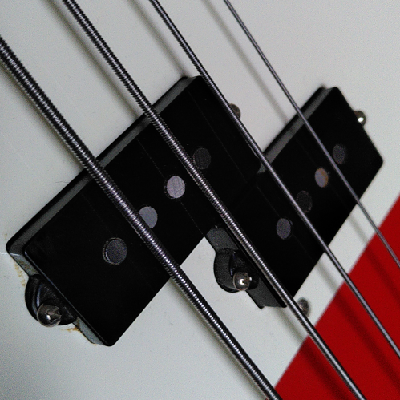
Petition to rename follow requests from empty profiles as hollow requests
Sven Slootweg (soft-deprecated)
boosted

minimalism is a scam invented by big small to sell more less
@s0x41 Someone with a prior history of problematic behaviour seems to have spun up an entire Thing around using Nix to package "AI" software, and seems to be uncomfortably successful at peddling this to the LLM community - I've been seeing mention of this Thing more and more
I think the #NixOS community should be a hell of a lot more hostile towards #LLM shit creeping into the community, actually.
This is just the next iteration of the tech hype grift, after NFTs and blockchains fell through (it's the same goddamn people!), and it's not something we should be legitimizing as a community.
Sven Slootweg (soft-deprecated)
boosted

"Cringe" is the reaction from others wanting to impose their level of acceptability on others for being too weird, too loud, too enthusiastic, too honest with what they are into.
"Cringe" is sad sack pieces of shit trying to make you as sad as they are.
Why do you want THEIR acceptance?
Who made them the arbiter of socially acceptable expression?
As for how to "embrace cringe"
I stepped away from communities where enthusiasm and authenticity were seen as weakeness, where any enjoyment had to be cradled in layers of irony and sarcasm because actually *caring* about something was seen as a weakness, a vulnerability, caring was being a loser.
Also I became a furry.
Sven Slootweg (soft-deprecated)
boosted

De coöptatie van XR
https://www.doorbraak.eu/de-cooptatie-van-xr/
"Een radicale groep wordt in de geschiedschrijving neergezet als gematigd, omdat de door hun nagestreefde doelen (door hun radicale actie!) gemeengoed is geworden. Vervolgens wordt het als voorbeeld gebruikt waarom je juist géén radicale actie moet voeren."
re: long
@dvzrv@chaos.social And thank you for engaging with it seriously :)
re: long
@dvzrv@chaos.social I don't think that them appearing under those programs necessarily means that it didn't work in the way I described - if those allocations happened as a "partner-delegated sub-fund" of such a program, I would expect it to still show up for the program itself as well, because it's generally a good look for grant organizations to list as many supported projects as possible.
However, I'm not *certain* that that is the case either. I think only NGI/NLNet themselves can clarify the exact arrangement here, and where these projects got funded from.
re: long
@dvzrv@chaos.social (Note that I am not involved in NGI or NLNet in any capacity, so I'm going entirely off my second-hand understanding of how this process works! It's very possible that I'm wrong here)
re: long
@dvzrv@chaos.social To illustrate with some completely imaginary numbers:
- Distro A receives 100k in funding
- Distro B receives 100k in funding
- Distro C establishes a partnership covering 100k in funding
- Distro C then allocates 25k of that funding to each of "Project C1, Project C2, Project C3, Project C4", all of which are specific to Distro C
The total funding for any of the distros isn't different from any of the others; there is just an additional delegation step.
(These are not the actual numbers of course, and in reality I do not believe that "equal funding for every distro" is a goal of NGI, this is just to illustrate that there being a partnership does not in and of itself change anything about the distribution of funds)
re: long
@dvzrv@chaos.social With "a foundation being part of a coalition", I assumed you were referring to this part in your article:
"the European Commission through DG CNECT has partnerships with NLnet and the NixOS Foundation"
That is the "partnership" I am referring to; it is (partly) delegating the allocation to the NixOS Foundation, because AIUI the intent is to fund "the NixOS ecosystem" in general, and the Foundation can then decide which things are best to fund for that purpose (in smaller amounts than normal NGI grants), from the total funding made available for "the NixOS ecosystem".
Crucially, if I am understanding the partnership correctly, that means that the NixOS Foundation *does not* have influence over the general allocation of NGI funds. Just over the funding that was already specifically pre-allocated to "the NixOS ecosystem", which is a finite total amount determined before any allocations take place.
I do not believe that that arrangement is exclusive to NixOS; if NGI/NLNet were to believe that "the Arch ecosystem" as a whole is similarly relevant to the goals of their grant program, then I don't see why such a partnership could not be established with eg. the Arch Linux project.
@njion@queer.party *repeatedly creates a new document cube, tries to make a thing, fails, gives up, and creates a new document cube again*
yeah, sounds about right
re: long
@dvzrv@chaos.social That "partnership" is, to my knowledge, nothing more than a "bulk grant" that is issued to an ecosystem, to then be distributed as smaller grants to participants of that ecosystem, without the grant organization needing to individually manage every small project that applies for a grant (which would result in a lot of overhead).
It's a model that iirc NLNet (and others) have used more frequently, to provide better coverage for individually smaller contributions that would themselves not be worth the overhead to go through the formal grant process. It doesn't result in more funding; it just cuts the funding pie into smaller slices, and delegates the allocation responsibility to another organization.
But that's not a conflict of interest; that's a process optimization, and to my knowledge something that is (principally) available to any ecosystem that is a) of general interest to the grant organization, and b) composed of many decentrally-organized initiatives rather than a centralized governance/development model.
Sven Slootweg (soft-deprecated)
boosted

"It doesn't matter who started it" is only true if the only thing you care about is having peace and quiet
Which is why, if you're a certain kind of disappointing centrist
You still believe it
Sven Slootweg (soft-deprecated)
boosted
Remember when you were a kid and they told you "It doesn't matter who started it" and you accepted that as Deep Moral Wisdom
They were wrong
Sven Slootweg (soft-deprecated)
boosted


re: long
@dvzrv@chaos.social Ah, I didn't realize you'd already reached out to them - I may have inferred incorrectly from your article, then, apologies.
I do still feel that the focus on (implications of) conflict of interest is probably not helpful here; much of the article by volume seems to be dedicated to that, but that never seems to really turn into a concrete point, and so it IMO detracts from your criticisms more than it supports them.
I think the criticisms would probably come across a lot more clearly if the article was just about the specific issues you have with the process; eg. about the selection being subjective without that being specified upfront clearly enough.
Those criticisms around their communication seem (to me, at least) like independently valid ones, that do not need be propped up by (honestly kind of shaky) claims of conflicts of interest or bias.
Sven Slootweg (soft-deprecated)
boosted

Aka "this description of my gender exists for the purpose of cishets not asking confused follow up questions. It does not accurately represent my identity."
re: long
@dvzrv@chaos.social Would this then not be better addressed by reaching out to NGI/NLNet first, outside of the grants process? Even just to express your concerns.
It seems to touch on a lot of their internal processes, which are difficult to judge for any outsider - and at least from what I've heard, they're decent at communicating with (at least by grant-issuing-organization standards).
It does mention things like "most promising ideas" on pages such as https://www.ngi.eu/opencalls/, implying a subjective selection, though perhaps they're not clear *enough* about that in enough places to really get it across...
The current article seems to be written in a strangely conspiratorial tone, and I don't know that that's going to be conducive towards getting these concerns resolved. It kind of comes across as burying the concrete criticisms in a pile of mostly tangential observations.



- Future new account
- @joepie91@slightly.tech
- Matrix
- @joepie91:pixie.town
- Pronouns
- they/them, he/him, whatever, it's not like I have any idea either 🙃
In the process of moving to @joepie91. This account will stay active for the foreseeable future! But please also follow the other one.
Technical debt collector and general hype-hater. Early 30s, non-binary, ND, poly, relationship anarchist, generally queer.
- No alt text (request) = no boost.
- Boosts OK for all boostable posts.
- DMs are open.
- Flirting welcome, but be explicit if you want something out of it!
- The devil doesn't need an advocate; no combative arguing in my mentions.
Sometimes horny on main (behind CW), very much into kink (bondage, freeuse, CNC, and other stuff), and believe it or not, very much a submissive bottom :p
My spoons are limited, so I may not always have the energy to respond to messages.
Strong views about abolishing oppression, hierarchy, agency, and self-governance - but I also trust people by default and give them room to grow, unless they give me reason not to. That all also applies to technology and how it's built.
Joined Aug 2019
